Best Architectural Glazing United States: A Professional Engineerin
The architectural identity of the United States has long been defined by its relationship with the glass pane. From the early cast-iron facades of SoHo to the ultra-clear “jumbo” glass towers currently reshaping the skylines of Hudson Yards and the Miami waterfront, glazing has evolved from a passive aperture into a highly active, multi-functional skin. Best Architectural Glazing United States. In the contemporary context, the building envelope is the site of a profound technological conflict: the desire for total visual transparency versus the urgent, code-driven necessity for thermal resistance and carbon neutrality.
Architectural glazing in the American market is subject to a unique set of geographic and regulatory pressures. A specification that thrives in the humid, hurricane-prone latitudes of the Gulf Coast would be functionally useless, and perhaps structurally dangerous, if applied to a high-altitude project in the Rockies or a seismic-sensitive development in the Bay Area. Consequently, the “best” glazing is never a universal product; it is a bespoke systemic response to site-specific environmental loads and human comfort requirements.
To discuss glazing at this level is to discuss material science at its most refined. We are no longer dealing with simple silica; the modern facade is a composite of microscopic metallic coatings, ionoplast interlayers, and inert gas fills. These components are engineered to manipulate the electromagnetic spectrum, selectively allowing visible light while repelling the infrared heat that would otherwise overwhelm a building’s internal cooling systems. This guide provides a definitive analysis of the technical and strategic frameworks that define the highest tier of the American built environment.
Understanding “Best Architectural Glazing United States”
The pursuit of the best architectural glazing united states often falls victim to the “U-value trap.” While thermal transmittance (U-value) is a critical metric for energy compliance, over-indexing on this single number often leads to secondary failures in occupant comfort. For instance, a window with an exceptional U-value may still have a poor Solar Heat Gain Coefficient (SHGC), leading to “greenhouse” overheating in the summer. A multi-perspective understanding recognizes that “best” is an optimization of four competing variables: thermal insulation, solar control, acoustic damping, and structural integrity.
A significant oversimplification in the American market is the assumption that high-performance glass is a commodity that can be value-engineered during late-stage construction. In reality, the glazing system is the primary driver of the building’s HVAC sizing. If the glazing specification is downgraded to save on initial capital costs, the building may require a much larger, more expensive mechanical system to handle the increased heat load. The risk here is a permanent increase in the building’s operational carbon footprint—a cost that far outweighs the initial savings on the glass itself.
Furthermore, the American regulatory landscape adds layers of complexity that are absent in other markets. The “Best” system must navigate the Tension between the International Building Code (IBC) and local jurisdictional amendments, such as New York’s bird-safe glass requirements or California’s Title 24 energy standards. Navigating these requirements requires a move away from “off-the-shelf” units toward integrated assemblies where the glass, the frame, and the sealant are tested as a unified whole.
Deep Contextual Background: The Evolution of the American Pane
The historical trajectory of American glazing is a move from “mass” to “membrane.” In the early 20th century, windows were small and punched into heavy masonry walls, which provided the bulk of the building’s thermal mass and structural support. The introduction of the float glass process in the late 1950s allowed for the creation of larger, flatter, and more affordable sheets, which catalyzed the rise of the glass-box skyscraper.
However, these early glass towers were notoriously inefficient “energy sieves.” The energy crises of the 1970s forced a pivot toward the development of Low-Emissivity (Low-E) coatings—microscopic layers of silver or other metals that reflect long-wave infrared energy. This technology transformed the window from a hole in the wall into a selective filter. Today, we are in the “Active” era of glazing, where vacuum-insulated glass (VIG) and electrochromic (smart) glass allow buildings to dynamically respond to sunlight, effectively turning the facade into a programmable component of the building’s mechanical system.
Conceptual Frameworks and Mental Models
To evaluate glazing at a senior editorial level, professionals employ several key frameworks:
-
The Mean Radiant Temperature (MRT) Model: This framework focuses on human comfort rather than just air temperature. It acknowledges that a person sitting next to a “cold” window in winter will feel uncomfortable even if the room’s air is 72°F. The best glazing maintains a surface temperature within 3-5 degrees of the interior air.
-
The “Envelope as Battery” Framework: This treats the building skin as a thermal storage device. High-performance glazing allows the building to “coast” through peak energy demand periods without triggering massive HVAC spikes.
-
The Tolerance Stack-up: A mechanical model that assumes every component (glass, gasket, aluminum mullion) has a manufacturing error. The best systems are designed with enough “slop” to remain airtight even when these tolerances aggregate at the building’s corners or transitions.
Primary Categories and Technical Trade-offs
Selecting a system involves weighing the inherent physics of different glass constructions.
Realistic Decision Logic
The decision-making process should follow a “Constraint-First” logic. If the project is a luxury residential penthouse in a noisy urban core like Chicago, the constraint is acoustics; the choice must be an asymmetric laminated IGU. If the project is a data center in Arizona, the constraint is SHGC; the choice is a triple-silver coating on a tinted substrate to minimize heat gain.
Detailed Real-World Scenarios Best Architectural Glazing United States

Scenario 1: The Coastal High-Rise (Miami)
The primary constraint here is “impact and cycle.” The glazing must survive a 2×4 timber impact at 50 feet per second and then endure 9,000 cycles of wind pressure. The failure mode to avoid is “delamination” of the interlayer due to salt-air ingress. The best solution is an ionoplast interlayer (such as SentryGlas) which is stiffer and more moisture-resistant than standard PVB.
Scenario 2: The Northern Museum (Minneapolis)
With extreme temperature differentials between the interior (70°F/50% RH for art preservation) and the exterior (-20°F), the risk is “inter-pane condensation.” The second-order effect is mold on the art or rot in the walls. The strategy involves a “warm-edge” spacer and a triple-glazed unit with a krypton gas fill to ensure the interior glass surface never reaches the dew point.
Planning, Cost, and Resource Dynamics
The economic analysis of glazing must account for “soft costs”—logistics, hoisting, and the opportunity cost of mechanical space.
Cost vs. Performance Table: | Performance Tier | Est. Cost per Sq. Ft. (Installed) | Expected ROI (Energy Only) | | :— | :— | :— | | Standard Double-Pane | $80 – $120 | 5 – 7 Years | | High-Performance Low-E | $150 – $250 | 8 – 12 Years | | VIG / Smart Glass | $400 – $600 | 15+ Years (Higher Asset Value) |
Tools, Strategies, and Support Systems
-
Hygrothermal Modeling (WUFI): Simulating how heat and moisture move through the glazing assembly over 50 years to predict rot or seal failure.
-
Spectrophotometers: Used on-site to verify that the glass delivered matches the “spectral signature” of the glass specified.
-
Infrared Thermography: Identifying “thermal bridges” where heat is escaping through the frame rather than the glass.
-
Acoustic Spectrometers: Tuning the glass lamination to specific urban frequencies (e.g., low-frequency bus rumble vs. high-frequency sirens).
-
Dynamic Wind Tunnel Testing: Essential for high-rises to ensure the glass “bite” in the frame can handle localized vortex shedding.
-
Bird-Collision Deterrent Filters: UV-visible patterns that are invisible to humans but prevent bird strikes, often required by municipal codes.
Risk Landscape: Taxonomy of Systemic Failures
Structural and functional failures in American glazing are typically categorized by their compounding effects:
-
Seal Failure (Desiccation): The primary seal of the IGU breaches, allowing moist air into the cavity. This leads to permanent fogging and the loss of the gas fill’s thermal benefits.
-
Thermal Stress Shattering: If a pane is partially shaded while the rest is in direct sun, the temperature gradient can cause the glass to expand unevenly and explode. This is a common risk with high-absorption tinted glass.
-
Nickel Sulfide (NiS) Inclusions: A microscopic impurity that can cause fully tempered glass to shatter spontaneously years after installation. The only mitigation is “Heat Soak Testing.”
-
Anaerobic Sealant Degradation: Certain secondary sealants can “weep” or turn to liquid if they are not compatible with the primary seal or the glazing gaskets.
Governance, Maintenance, and Long-Term Adaptation
A “pillar” asset requires a rigorous lifecycle governance plan:
-
Annual Weep-Hole Audit: Ensuring the drainage paths in the frames are not clogged with dust or insects.
-
5-Year Sealant Recalibration: Inspecting the perimeter caulk joints (the “wet seal”) for signs of crazing or loss of adhesion.
-
10-Year Gas Verification: Measuring the concentration of Argon/Krypton within the IGUs to ensure they are still providing the rated thermal performance.
-
Cleaning Protocol: Prohibiting the use of abrasive cleaners or “squeegees” on glass with exterior-surface coatings (Surface 1 coatings)
Measurement, Tracking, and Evaluation
-
Leading Indicators: Daily Relative Humidity (RH) levels in the building. If RH spikes without a corresponding weather event, the glazing seals may be breached.
-
Lagging Indicators: Total HVAC kWH usage compared to the energy model’s baseline.
-
Documentation Standards: Maintaining a “Glass Schedule” that includes the manufacturer’s batch number for every single pane to allow for exact color-matching during future replacements.
Common Misconceptions and Industry Myths
-
“Triple-pane is always the best”: In some climates, the massive weight of triple-pane requires so much extra structural steel that the “embodied carbon” of the building increases, negating the energy savings.
-
“Vacuum glass is too new to trust”: VIG has been used in niche applications for decades and is now a proven solution for historic retrofits where frame depth is limited.
-
“Low-iron glass is fragile”: Iron content affects color (the green tint), not structural strength.
-
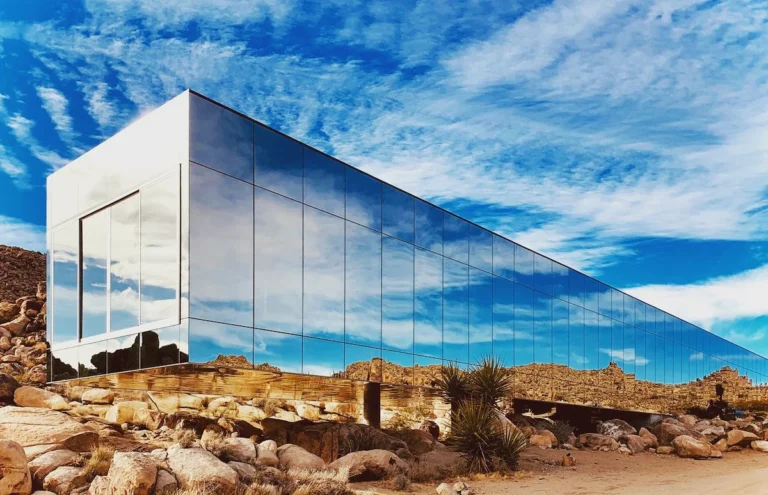
“Mirror glass is the best for heat”: While it reflects heat, it creates “light pollution” and heat islands that can damage neighboring buildings and trees.
-
“Condensation on the outside is a failure”: Exterior condensation is actually a sign of a high-performance window; it means the heat from the house is not reaching the outer pane.
Ethical, Practical, and Contextual Considerations
The selection of architectural glazing is increasingly an ethical decision. The industry is grappling with “The Mirror Effect”—where highly reflective glass in urban centers like Dallas or Los Angeles creates localized “micro-climates” that can melt car parts or damage sidewalks. Furthermore, best architectural glazing united states, the “Right to Light” for neighboring buildings is becoming a legal flashpoint. Specifying the best architectural glazing united states now requires a “Good Neighbor” analysis to ensure that one building’s efficiency does not come at the expense of its neighbor’s comfort.
Synthesis: The Future of the Adaptable Envelope
The trajectory of architectural glazing is moving toward total integration. The facade is no longer a static wall but a skin that “breathes,” “thinks,” and “harvests.” As we look toward 2030, the distinction between a window and a solar panel will likely disappear, with transparent photovoltaic coatings becoming a standard requirement for net-zero buildings.
Ultimately, the mastery of the glazed envelope is a testament to architectural judgment. It requires the humility to acknowledge that the “best” glass is the one that goes unnoticed—providing a seamless connection to the American landscape while maintaining a silent, resilient barrier against the forces of nature. The definitive architectural asset is not the one with the most complex glass, but the one where the glass is most perfectly tuned to its specific coordinate on the planet.