How to Manage Glass Condensation: A Professional Engineering
Transparency in architecture creates a fundamental paradox. While we desire the visual continuity of glass, the material itself acts as a thermal conductor and a surface for moisture accumulation. Glass condensation is rarely a problem with the glass itself; rather, it is a visible symptom of a systemic imbalance between interior humidity, surface temperature, and atmospheric conditions. How to Manage Glass Condensation. When these variables intersect at the “dew point,” water vapor transitions from a gas to a liquid, manifesting as the fogging or droplets that obscure views and, more critically, threaten the structural and biological integrity of the building envelope.
Addressing this phenomenon requires moving beyond the surface-level inconvenience. Persistent moisture is a precursor to secondary failures: the degradation of timber joinery, the oxidation of metal fasteners, and the proliferation of mold spores that compromise indoor air quality. In commercial and high-end residential settings, the stakes are even higher.
Managing this issue is an exercise in atmospheric control. It requires a deep understanding of the psychrometric chart—the relationship between air temperature, moisture content, and enthalpy. To effectively mitigate condensation, one must manipulate the building’s internal environment with as much precision as the external facade was engineered. This guide provides an analytical framework for identifying the root causes of moisture accumulation and implementing resilient, long-term solutions that protect both the architectural asset and the occupants within.
How to Manage Glass Condensation
When a building professional or property owner investigates how to manage glass condensation, they are essentially attempting to decouple the interior air’s moisture content from the temperature of the glass surface. The logic of management is divided into three distinct zones: the interior surface, the exterior surface, and the internal cavity of the Insulated Glass Unit (IGU). Each zone requires a different set of interventions and represents a different type of systemic feedback.
One of the most significant oversimplification risks in this field is the assumption that condensation is always a sign of window failure. On the contrary, condensation on the exterior surface of high-performance glass is often a badge of efficiency. It indicates that the glass is so effective at preventing interior heat from reaching the outer pane that the outer pane remains at the ambient outdoor temperature, allowing morning dew to form.
Interior condensation, the most common and troublesome form, is usually a byproduct of human activity and inadequate air exchange. Bathrooms, kitchens, and even the simple act of breathing in a well-sealed “Passive House” can raise relative humidity levels beyond the glass’s ability to remain above the dew point. Managing this requires a shift from viewing the window as a static object to seeing it as a component of a larger ventilation strategy. The goal is to ensure that the interior surface temperature of the glass remains higher than the dew point of the indoor air at all times.
Deep Contextual Background: The Evolution of Thermal Barriers
Historically, glass condensation was an accepted reality of winter life. Single-pane windows offered almost no thermal resistance, acting as cold plates that harvested moisture from the interior. The solution in the early 20th century was the “storm window”—a secondary pane added seasonally to create a primitive air gap. While this improved thermal comfort, it often trapped moisture between the panes, leading to the rot of wooden sills.
The introduction of the factory-sealed Insulated Glass Unit (IGU) in the mid-20th century revolutionized the industry. By trapping a layer of dry air or inert gas between two panes and sealing it with a primary and secondary sealant, engineers created a “thermal break.” However, as buildings became more airtight to meet modern energy codes, the natural “leaks” that used to provide air exchange disappeared. This has created a modern crisis where the glass is better than ever, but the air inside is wetter than ever, leading to a resurgence of condensation issues in even the most expensive contemporary structures.
Conceptual Frameworks and Mental Models
To analyze and address moisture issues, editorial-level thinkers use specific mental models:
-
The Dew Point Margin: This is the temperature difference between the glass surface and the current dew point. Success is measured by the “buffer” we can maintain. If the dew point is 50°F and the glass is 52°F, the margin is too slim; any slight drop in outdoor temperature will trigger condensation.
-
The Thermal Bridge Effect: View the window frame and the glass edges as “highways” for heat. Even if the center of the glass is warm, a metal frame can act as a bridge, pulling heat out and creating a localized cold spot at the perimeter where condensation starts.
-
The Atmospheric Sponge Model: Air is like a sponge; the warmer it is, the more water it can hold. When warm, moist air hits cold glass, the “sponge” is squeezed, and the water is forced out.
Primary Categories of Condensation and Technical Trade-offs
| Condensation Type | Location | Primary Cause | Management Logic |
| Interior Surface | Inside the room | High indoor humidity + cold glass | Increase ventilation; use warm-edge spacers |
| Exterior Surface | Outside the building | High-efficiency glass + humid nights | Usually a sign of performance; wait for sun |
| Internal (IGU) | Between the panes | Seal failure; desiccant saturation | Full replacement of the glass unit |
| Perimeter/Edge | Glass margins | Metal spacers; thermal bridging | Upgrade to non-conductive spacers |
| Frame-Based | Window frames | Non-thermally broken frames | Replace with thermally broken profiles |
Decision Logic: Remediation vs. Replacement
If condensation occurs on the interior, the decision logic should first prioritize “behavioral and mechanical” changes (dehumidification and airflow). If these fail, the focus shifts to “component” changes, such as replacing the existing IGU with one featuring a “Low-E” coating on the fourth surface (the interior face) to keep the glass warmer.
Detailed Real-World Scenarios How to Manage Glass Condensation
Scenario 1: The High-Rise Condominium
In a modern high-rise, residents often report condensation in the bedrooms during winter. The constraint is the building’s airtight envelope. The decision point here is the HVAC’s “Energy Recovery Ventilator” (ERV) setting. The failure mode is mold growth on the silicone seals at the base of the floor-to-ceiling windows.
Scenario 2: The Historic Home Retrofit
When new double-glazing is installed into old wooden frames without addressing the lack of a “thermal break” in the wood-to-wall transition, moisture can accumulate at the frame’s edge. The second-order effect is that the moisture wicks into the lath and plaster walls, causing paint failure and structural rot that is invisible from the surface.
Planning, Cost, and Resource Dynamics
The financial burden of moisture management varies between proactive engineering and reactive repair.
| Action Item | Direct Cost | Opportunity Cost/Risk |
| Hygrothermal Analysis | Moderate | Prevents system-wide mold remediation ($$$) |
| Dehumidification Systems | Low-Moderate | Increased electricity consumption |
| Warm-Edge Spacer Upgrade | Low (at purchase) | If skipped, edge condensation is permanent |
| IGU Replacement | High | Labor, crane rental, and downtime |
Performance Variability Table:
| System Component | Surface Temp Impact | Condensation Resistance Factor (CRF) |
| :— | :— | :— |
| Aluminum Spacer | -5°F at edge | 35-45 (Poor) |
| Stainless Steel Spacer | -2°F at edge | 50-60 (Moderate) |
| Polymer/Foam Spacer | +2°F at edge | 70+ (Superior) |
Tools, Strategies, and Support Systems
-
Hygrometers: Essential for tracking the “Relative Humidity” (RH) of a space. Ideally, indoor RH should be between 30% and 50% in winter.
-
Infrared Thermography: Using thermal cameras to identify “cold spots” on the glass or frame where insulation is missing.
-
Psychrometric Charts: Used by engineers to plot the exact point where air will saturate.
-
Warm-Edge Spacers: Replacing traditional aluminum spacers between glass panes with non-conductive materials to raise the temperature of the glass perimeter.
-
Desiccant-Filled Cavities: Ensuring the spacer bar contains enough molecular sieve to absorb residual moisture inside the IGU.
-
Fourth-Surface Coatings: Specifying a Low-E coating on the room-side surface to reflect heat back into the room and keep the glass warm.
Risk Landscape and Failure Modes
-
Compound Mold Growth: Condensation creates a micro-climate on the sill that supports Stachybotrys or Aspergillus.
-
Seal Desiccation: In cheap IGUs, the secondary sealant (often PIB or Polysulfide) can become brittle. Once the seal is “breached,” the window begins to “breathe,” drawing in moist air every time the temperature cycles.
-
The “Double-Glazing Myth”: Believing that double-glazing solves all problems. In extremely cold climates, even double-glazing can reach the dew point if the interior air is too humid.
Governance, Maintenance, and Long-Term Adaptation
A robust management cycle includes:
-
Seasonal Calibration: Adjusting humidifiers and ERVs as the outdoor temperature drops.
-
Seal Integrity Checks: Inspecting the perimeter of the glass for signs of “creeping” or “fogging” every autumn.
-
Airflow Management: Ensuring that heavy drapes or furniture do not block floor vents, which are designed to wash the glass with warm air to prevent cold spots.
Measurement and Tracking
-
Leading Indicators: Daily RH readings and outdoor air temperature forecasts.
-
Lagging Indicators: Visible moisture on the glass or salt deposits (efflorescence) on the sills.
-
Documentation: Maintain a “Condensation Event Log,” noting the outdoor temperature and indoor RH whenever fogging occurs. This is critical for warranty claims against glass manufacturers.
Common Misconceptions
-
“Condensation is always the window’s fault”: It is usually the air’s fault.
-
“Closing the curtains helps”: It actually makes it worse by trapping cold air against the glass, making the glass surface even colder.
-
“New windows won’t have condensation”: New windows are more airtight, which can actually increase indoor humidity and lead to more condensation if ventilation isn’t addressed.
-
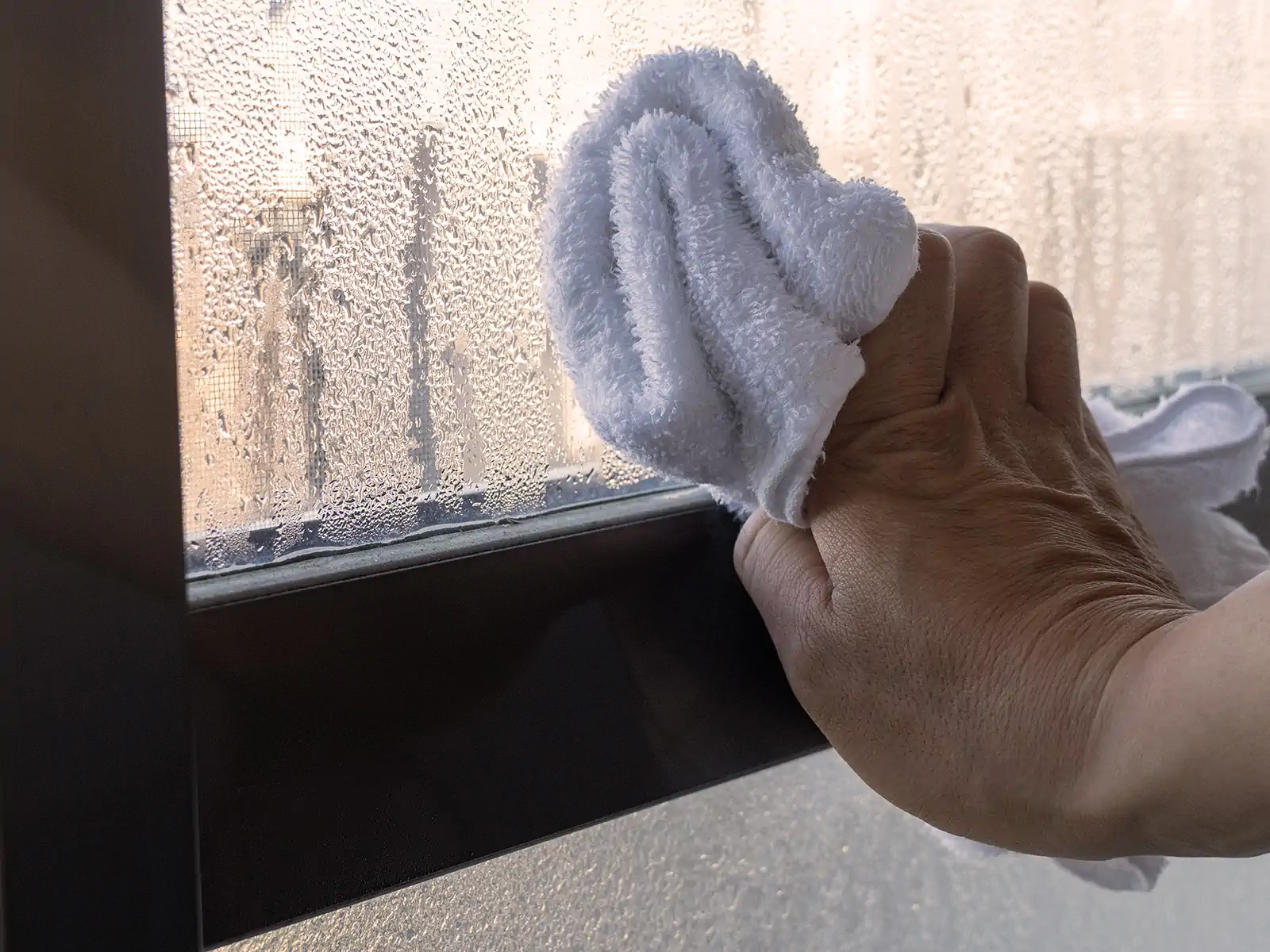
“Wiping it off is enough”: Wiping is a temporary aesthetic fix; the water that runs into the frame is the real danger.
Conclusion: Synthesis and Systemic Adaptability
To master how to manage glass condensation is to master the climate of the home or office. It is a dynamic process that requires balancing the desire for energy efficiency with the physiological need for moisture control. As we move toward 2026 and beyond, with increasingly extreme weather patterns and ultra-efficient building envelopes, the “active” management of the dew point will become as standard as adjusting a thermostat. The goal is a transparent boundary that remains invisible—not just to the eye, but to the physics of water vapor.