Common Curtain Wall Mistakes: A Flagship Guide to Facade
The curtain wall stands as one of the most significant architectural achievements of the modern era, liberating the building’s skin from its structural skeleton. By definition, a curtain wall is a non-structural exterior covering that carries only its own weight and the environmental loads imposed upon it, such as wind and seismic forces. However, this technical “lightness” is deceptive. Common Curtain Wall Mistakes. The interface where the glass and aluminum envelope meets the primary building structure is a zone of immense physical stress, where millimetric precision determines whether a facade will endure for fifty years or succumb to systemic failure within five.
Engineering a successful curtain wall requires a sophisticated reconciliation of contradictory forces. The system must be rigid enough to resist hurricane-force winds but flexible enough to accommodate the building’s natural sway and thermal expansion. It must be hermetically sealed against moisture infiltration while simultaneously providing a path for internal condensation to escape. When these delicate balances are upset, the result is not merely an aesthetic blemish; it is a breach of the building’s fundamental defense mechanism.
In the current landscape of rapid construction cycles and increasingly complex geometric designs, the margin for error has narrowed. Failures in curtain wall systems are rarely the result of a single catastrophic oversight. Instead, they are typically the product of compounding deficiencies—small deviations in seal geometry, mismatched thermal coefficients, or the neglect of secondary drainage paths. Understanding these vulnerabilities is essential for any professional tasked with the design, installation, or maintenance of high-performance building envelopes.
Understanding “Common Curtain Wall Mistakes”
To effectively analyze common curtain wall mistakes, one must first acknowledge that a curtain wall is a “system,” not a “product.” The industry often suffers from a fragmented perspective where the glass manufacturer, the aluminum extruder, and the sealant supplier operate in silos. This fragmentation is the primary breeding ground for errors. A “mistake” in this context is rarely a lack of material quality; it is almost always a failure of integration—a breakdown in how these disparate components interact under environmental stress.
A prevalent misunderstanding is the belief that water infiltration is purely a sealing issue. In reality, the most robust curtain walls are designed with the “Pressure Equalized Rain Screen” (PERS) principle. This logic assumes that some water will bypass the primary seals. The failure occurs when the internal drainage or “weep” system is obstructed or incorrectly baffled, trapping water within the aluminum profiles where it eventually finds a path into the building interior. Oversimplifying the solution to “more caulk” often exacerbates the problem by blocking these critical drainage paths, turning a minor leak into a structural rot issue.
Furthermore, risks are often introduced during the transition from architectural intent to shop drawings. A design may look impeccable in a rendering, but if the “stack joints” (the horizontal expansion joints) are not sized to account for the actual live-load deflection of the floor slabs, the glass panels will eventually meet, leading to edge-shattering or total panel failure. Avoiding these mistakes requires a move toward “Integrated Project Delivery” (IPD), where the glazing contractor and structural engineer coordinate the tolerance stack-up long before the first anchor is cast into the concrete.
Deep Contextual Background: The Evolution of the Barrier
The historical trajectory of the curtain wall moved from the “Face-Seal” philosophy of the early 20th century to the “Water-Managed” and “Pressure-Equalized” systems of today. Early systems relied entirely on the integrity of the exterior bead of sealant. As these buildings aged, the sealant hardened and failed, leading to ubiquitous leaks. This led to the development of the “internal gutter” system—a realization that the building envelope should act more like a filter than a dam.
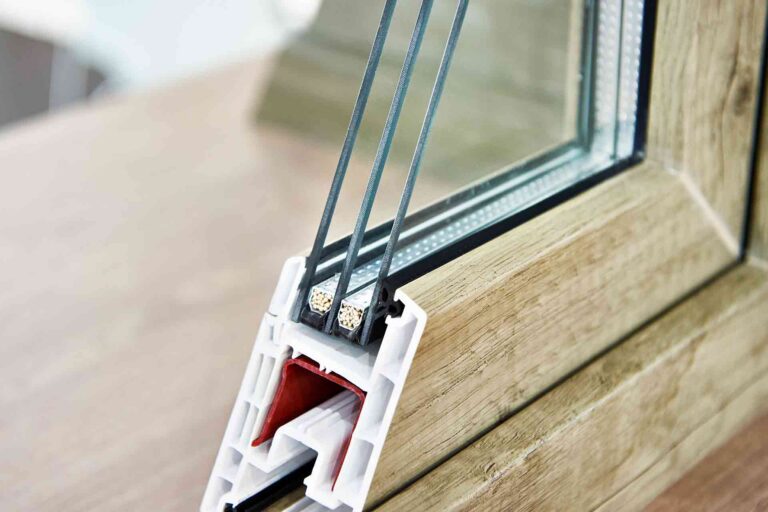
As building heights increased and energy codes became more stringent, the curtain wall had to adapt to higher wind pressures and greater thermal movements. The introduction of “thermal breaks”—polyamide or polyurethane barriers within the aluminum—vastly improved energy efficiency but introduced a new failure point: the “thermal bridge.” If these breaks are bypassed by metal fasteners or poorly designed anchors, condensation will form on the interior frame, leading to mold and localized water damage that is often misdiagnosed as an external leak.
Conceptual Frameworks and Mental Models
To diagnose and prevent facade failure, editorial-level thinkers apply these frameworks:
-
The “Rain Screen” Mental Model: Assume the exterior seal is a sieve, not a wall. The real defense is the “air barrier” on the protected side of the drainage cavity and the pressure equalization that prevents wind from driving water through the joints.
-
The Tolerance Stack-up: Every component has a manufacturing tolerance. If ten components are joined, the cumulative error can be significant. Failure occurs when the design does not provide enough “slop” or adjustability in the anchors to accommodate this reality.
-
The 3-Dimensional Corner Logic: Most leaks do not happen in the “field” (the flat part of the wall); they happen at the corners, transitions, and penetrations. A successful plan focuses 90% of its scrutiny on these 3D junctions.
Primary Categories of Systemic Deficiencies
| Category | Primary Failure Mode | Root Cause |
| Thermal Bridging | Interior condensation/frost | Discontinuous thermal breaks; metal-to-metal contact |
| Expansion Failure | Glass breakage; “popping” noises | Inadequate clearance in stack joints or glazing pockets |
| Drainage Obstruction | Internal water pooling; leakage | Clogged weep holes; missing end-dams in the horizontal mullion |
| Sealant Incompatibility | Delamination/Adhesion loss | Using acid-cure silicone on sensitive coatings or gaskets |
| Anchor Misalignment | Structural instability; racking | Out-of-tolerance concrete slabs; lack of 3-axis adjustability |
| Acoustic Flanking | Noise transmission between floors | Failure to properly seal the “slab-edge” fire-stop gap |
Detailed Real-World Scenarios Common Curtain Wall Mistakes
Scenario 1: The “Short-Circuited” Thermal Break
In a luxury residential tower, residents report ice forming on the aluminum frames during a cold snap. Investigation reveals that the glazing contractor used standard steel screws to attach the pressure plates, which pierced through the polyamide thermal break.
-
The Lesson: A single metal fastener can act as a thermal highway, rendering an expensive high-performance frame useless.
Scenario 2: The Missing End-Dam
A commercial office building experiences leaks only during heavy wind-driven rain. Testing shows that while the horizontal mullions have gutters, the “end-dams” (the plugs at the end of the gutter) were either omitted or not properly sealed to the vertical mullion.
-
The Lesson: Water traveled horizontally along the gutter and poured into the vertical mullion cavity, bypassing all primary defenses.
Planning, Cost, and Resource Dynamics
The economics of curtain walling are heavily skewed toward the “In-Place” cost. While the materials are expensive, the cost of replacing a single panel on the 40th floor is exponentially higher than the initial installation.
| Item | Direct Cost Impact | Opportunity Cost of Failure |
| Performance Mock-up Testing | $50k – $150k | Prevents $M in systemic remediation |
| Third-Party QC Inspector | 1% of facade budget | Identifies site errors before they are “closed in” |
| High-Performance Sealants | Low (relative to glass) | High (if re-caulking is required via scaffolding) |
| Pre-assembled Unitized Panels | Higher upfront | Lower site-error risk; faster schedule |
Tools, Strategies, and Support Systems
-
BIM (Building Information Modeling): Critical for identifying “clashes” between the curtain wall anchors and the structural steel or rebar.
-
Field Water Testing (AAMA 501.2): Using a calibrated nozzle to spray joints under pressure to verify site-work quality.
-
Infrared Thermography: Non-destructive testing to find missing insulation or failed thermal breaks.
-
Structural Silicone Deglazing: Periodic “cut-out” tests to ensure the bond between glass and aluminum is meeting design specs.
-
Deflection Gauges: Used during mock-up tests to measure how much the aluminum mullions “bow” under wind load.
Risk Landscape and Failure Modes
Common curtain wall mistakes often fall into a taxonomy of “compounding risks.” For example, a minor structural deflection might not break the glass, but it might stretch a sealant joint just enough to allow air infiltration. That air carries moisture, which condenses on the cold aluminum, leading to corrosion of the anchors. This is a “cascading failure.”
-
Aesthetic Failure: Glass “oil-canning” or visual distortion due to heat-treating.
-
Serviceability Failure: Leaks, drafts, and whistling noises (aeolian tones).
-
Ultimate Failure: Detachment of glass panes or aluminum components from the building.
Governance, Maintenance, and Long-Term Adaptation
To preserve a flagship facade, a layered governance checklist is required:
-
Annual Weep Inspection: Clearing dust and debris from the external weep holes to prevent “reservoir” effects.
-
5-Year Sealant Audit: Checking the “Shore A” hardness of the silicone. If the sealant is brittle, it is no longer absorbing movement.
-
Gasket Monitoring: Looking for “shrink-back” at the corners of EPDM gaskets, which creates a direct hole for water ingress.
Measurement, Tracking, and Evaluation
-
Leading Indicators: Number of “non-conformance reports” (NCRs) during the factory assembly phase.
-
Lagging Indicators: Number of service calls for leaks within the first two years of occupancy.
-
Documentation: A “Facade Birth Certificate” for every unitized panel, tracking its batch of glass, the technician who applied the sealant, and the date it was hung.
Common Misconceptions and Industry Myths
-
“More silicone is better”: Excess silicone often blocks the “weep” paths, causing water to back up into the building.
-
“Curtain walls are self-cleaning”: While rain helps, pollutants can etch the glass or degrade the gaskets if not professionally cleaned bi-annually.
-
“Glass is a solid”: In high-performance engineering, glass is treated as a flexible plate that “bows” significantly under wind load.
-
“The architect handles the details”: Architects provide the intent; the “glazing engineer” and the “shop drawer” provide the mechanics. Failure often happens in the hand-off between the two.
Synthesis
The integrity of the building envelope is the ultimate testament to architectural discipline. Navigating the pitfalls of common curtain wall mistakes is not about seeking perfection, but about engineering for the inevitable: the inevitable movement of the building, the inevitable pressure of the wind, and the inevitable presence of water. A truly authoritative facade plan is one that respects the laws of thermodynamics and the reality of site tolerances. As we continue to push the boundaries of vertical transparency, our ability to master these technical nuances will define the difference between a landmark and a liability.