Top Glass Architecture in the US:A Definitive Guide to Iconic Design
The integration of glass into the American architectural lexicon has moved far beyond the utilitarian application of windows. In the United States, glass serves as a medium through which the tension between the built environment and the natural landscape is negotiated. From the radical transparency of mid-century modernism to the sprawling, algorithmically optimized envelopes of Silicon Valley, the use of glass is a statement of intent—technological, aesthetic, and environmental. Top Glass Architecture in the US. The pursuit of “top glass architecture in the us” is not merely an inventory of skyscrapers; it is a study in the evolution of material science and the American desire to blur the boundary between “inside” and “out.”
For decades, the standard for excellence was defined by the International Style, where steel and glass collaborated to create the “universal space.” However, the contemporary landscape has shifted toward a more nuanced application. Architects are now grappling with the paradoxical requirements of maximum transparency and net-zero energy performance. This has led to the development of highly complex assemblies: triple-glazed units with inert gas fills, spectrally selective coatings that differentiate between light and heat, and bird-safe ceramic frits that reconcile human aesthetics with ecological responsibility.
Understanding these structures requires an analytical eye that can see past the reflection. A masterpiece of glass architecture is rarely the result of a single design choice; it is the culmination of rigorous structural engineering, careful consideration of regional climate zones, and a long-term commitment to system maintenance. As we deconstruct the premier examples of this craft, we move into a realm where the material’s fragility is its greatest strength, offering a permanence that is, ironically, defined by its perceived invisibility.
Understanding “top glass architecture in the us”
Defining top glass architecture in the us requires a shift from purely visual appreciation to a multi-perspective evaluation of performance. From an architectural historian’s view, “top” refers to structures like Philip Johnson’s Glass House, which redefined the domestic interior. For a modern structural engineer, however, the term might apply to the Apple Park “spaceship” in Cupertino, which utilizes the world’s largest panels of curved structural glass. The risk of oversimplification lies in treating all “glass buildings” as a monolith; in reality, a glass facade in the humid Southeast operates under entirely different physical constraints than one in the arid Southwest.
One must consider the “Performance-to-Transparency Ratio.” A building that is 100% glass but requires massive HVAC loads to remain habitable is increasingly seen as a failure of design. Therefore, the contemporary “top” structures are those that achieve high visual light transmittance ($VLT$) while maintaining a low solar heat gain coefficient ($SHGC$). The misunderstanding often persists that “more glass” equals “less energy efficiency,” but advancements in vacuum-insulated glazing ($VIG$) and dynamic tinting are proving that glass can be an active participant in a building’s energy harvesting strategy.
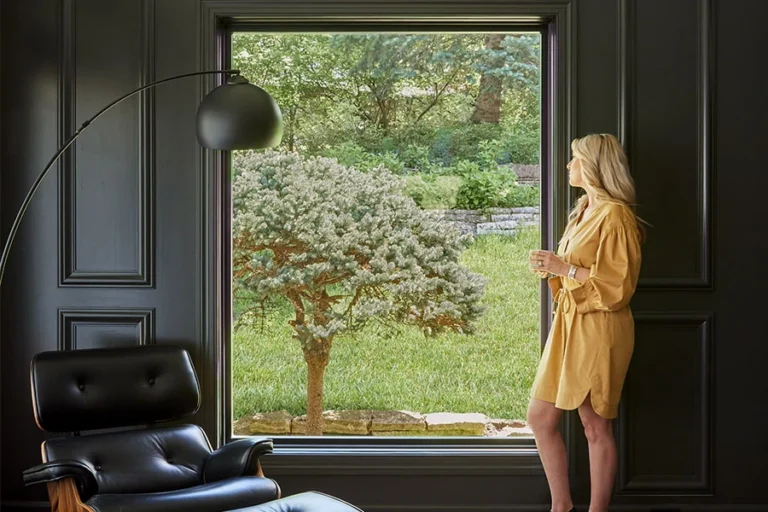
Finally, “top” status in the American context is often linked to “Contextual Integration.” Unlike the glass boxes of the 1960s that stood in stark contrast to their surroundings, modern glass architecture in the U.S. often seeks to disappear. The use of low-iron glass—which removes the natural green tint found in standard float glass—allows for a level of clarity that makes the building envelope seem almost nonexistent, effectively “curating” the landscape for the occupants while minimizing the structure’s visual mass.
The Systemic Evolution of American Glazing
The history of glass in U.S. architecture is a transition from “Infill” to “Enclosure.” In the 19th century, glass was limited by the “Crown” and “Cylinder” manufacturing methods, which produced small, wavy panes. The primary constraint was size; windows were punctures in a solid masonry wall. The industrial revolution and the advent of the “Plate Glass” process allowed for larger sheets, but it was the 1952 commercialization of the “Float Glass” process by Pilkington that truly unlocked the curtain wall era.
In the United States, this evolution was catalyzed by the “International Style.” Architects like Mies van der Rohe utilized glass to create “Skin and Bone” architecture, where the steel frame did the work and the glass provided the light. However, the energy crises of the 1970s forced a pivot. The industry moved from single-pane “annealed” glass to insulated glass units (IGUs). This was followed by the “Low-E Revolution” of the 1980s and 90s, where microscopic metallic coatings were applied to reflect infrared heat. Today, we have entered the “Digital/Structural Era,” where glass is no longer just a window; it is a load-bearing element and a “smart” membrane capable of changing its opacity in response to the sun.
Conceptual Frameworks for Architectural Glass
1. The “Skin vs. Organ” Framework
This model views the glass facade as a biological membrane. In “top” architecture, the glass is not a static skin; it is a “breathing” organ that manages light, air, and heat. The cost of failure in this framework is a “sick building,” where internal environments become disconnected from human circadian rhythms.
2. The “Refractive Index” Mental Model
Designers use this to manage how a building “sits” in its environment. High reflectivity can make a building an icon (like the Willis Tower in certain lights) or a hazard (creating “death rays” that melt local cars). The goal is to balance “Specular Reflection” with “Transparency.”
3. The “Structural Integrity through Compression” Model
Unlike steel, which handles tension well, glass is strongest in compression. This framework is essential for understanding “Structural Glass” (fins, beams, and floors). To achieve “top” status, these structures must manage the “Buckling Length” of the glass to ensure safety without adding opaque supports.
Key Categories and Typologies of Glass Structures
| Typology | Key Representative Example | Primary Material Focus | Strategic Trade-off |
| Residential Pavilion | Farnsworth House (IL) | Single-pane, high-clarity | Aesthetic purity vs. thermal comfort |
| High-Rise Curtain Wall | One World Trade (NY) | Laminated, high-strength IGU | Security/Blast-resistance vs. Weight |
| Cultural/Institutional | Academy Museum of Motion Pictures (CA) | Curved, structural glass | Geometry complexity vs. Fabrication cost |
| Corporate Campus | Apple Park (CA) | Oversized, bent Low-E panels | Visionary scale vs. Logistics/Lead times |
| Retail Flagship | Fifth Avenue Apple Cube (NY) | Structural glass fins/beams | Minimalism vs. Maintenance accessibility |
Detailed Real-World Scenarios: Iconic Case Studies Top Glass Architecture in the US

Scenario 1: The “Invisible” Museum (Academy Museum, LA)
The “Sphere” at the Academy Museum features a massive glass dome.
-
The Constraint: It must withstand seismic activity in Los Angeles while remaining perfectly transparent.
-
The Decision: Engineers used a “shingled” glass approach where the panes are not rigidly fixed but “float” on a steel exoskeleton.
-
Second-Order Effect: The overlapping glass creates natural “weep paths” for water, reducing the need for complex internal drainage systems within the dome.
Scenario 2: The “Energy Neutral” Skyscraper
A new tower in Seattle seeks to use “Solar Glass.”
-
The Constraint: Seattle’s frequent overcast skies limit standard photovoltaic efficiency.
-
The Decision: The specification of “Clear-PV”—transparent solar cells embedded in the IGU.
-
Failure Mode: If the electrical connections (busbars) are not properly hidden, the building loses its “all-glass” aesthetic and takes on a “grid-like” appearance that clashes with the design intent.
Planning, Cost, and Resource Dynamics
The economics of top glass architecture in the us are influenced by the “Radius of Fabrication.” Because high-performance glass is heavy and fragile, the cost of shipping often exceeds the cost of the material.
| Glass Component | Cost per Sq Ft (Installed) | Maintenance Profile | Life Expectancy |
| Standard Low-E IGU | $40 – $70 | Low | 25 – 30 Years |
| Structural Glass Fins | $250 – $500 | Medium | 50+ Years |
| Curved/Bespoke Panes | $600 – $1,200+ | High | 40 Years |
| Smart/Dynamic Glass | $150 – $300 | Medium | 20 Years (Electronics limit) |
Resource Variability
The availability of “Low-Iron” silica is a major bottleneck. Only a few plants in the U.S. produce the ultra-clear glass required for flagship projects. A delay at a single furnace in Pennsylvania can halt a skyscraper project in San Francisco for months.
Tools, Strategies, and Support Systems
-
Computational Fluid Dynamics (CFD): Used to model how wind interacts with complex glass shapes to prevent “harmonic vibration.”
-
Solar Path Modeling: Predicting exactly where “hot spots” will occur on the facade at 2:00 PM on the Summer Solstice.
-
Vacuum-Insulated Glazing (VIG): A support system that provides triple-pane insulation in a double-pane thickness by removing the air between panes.
-
Acoustic Interlayers: Specialty PVB (Polyvinyl Butyral) layers that dampen sound without adding thickness.
-
Heat Soaking Ovens: A critical risk-reduction strategy to identify “Nickel Sulfide” inclusions before the glass leaves the factory.
-
Fritting and Silk-Screening: Applying ceramic patterns to glass to reduce glare and prevent bird strikes.
Risk Landscape and Taxonomy of Failure Modes
-
Delamination: The separation of the plastic interlayer from the glass, often caused by “edge-seal” failure and moisture ingress.
-
Spontaneous Breakage: Usually the result of Nickel Sulfide ($NiS$) inclusions—microscopic impurities that expand over time in tempered glass.
-
Optical Distortion (The “Funhouse” Effect): Occurs when the heat-treating process (tempering) is not perfectly calibrated, creating “waves” in the glass surface.
-
Sealant Incompatibility: When the silicone used to seal the window “attacks” the laminated interlayer, leading to clouding.
Governance, Maintenance, and Long-Term Adaptation
A “Pillar” glass structure requires a “Governance Manual.” This is not just a cleaning schedule; it is a life-cycle plan.
The Adaptation Checklist:
-
Sealant Audit: Every 5–7 years, the “wet seals” must be inspected for UV degradation.
-
Thermal Stress Monitoring: Using infrared sensors to ensure the “shading patterns” from new neighboring buildings aren’t creating new crack risks.
-
Gasket Replacement: Unlike the glass, the rubber gaskets have a finite life. A “top” building will have a plan to replace gaskets from the exterior without removing the glass.
Measurement, Tracking, and Evaluation
-
U-Value Tracking: Measuring the “Heat Loss Rate.” A rising U-value indicates that the Argon gas has leaked out of the IGU.
-
VLT Degradation: Some coatings can “haze” over decades. Tracking “Clarity Loss” helps determine when a facade needs a “Refining Polish” or replacement.
-
Documentation Example: “The Glazing Log”—a digital twin that records the “Batch Number” and “Coating Side” for every single pane in the building to ensure perfect color matches during future repairs.
Common Misconceptions and Oversimplifications
-
Myth: “Glass buildings are bird killers.” Correction: Modern “top” architecture uses UV-reflective patterns that are visible to birds but invisible to humans.
-
Myth: “Glass is a weak material.” Correction: Properly tempered, laminated glass is stronger than some types of wood and can be used as a primary structural column.
-
Myth: “All glass is recyclable.” Correction: While “bottle glass” is, “architectural glass” with coatings and laminates is extremely difficult to recycle, leading to a focus on “Adaptive Reuse.”
-
Myth: “Double-pane glass is the ultimate energy saver.” Correction: It is a baseline; “top” buildings now use “Vacuum-Insulated” or “Triple-Pane” systems to reach R-values comparable to solid walls.
Conclusion: The Future of Transparency
The trajectory of top glass architecture in the us is moving toward “Active Performance.” We are leaving the era where glass was a passive barrier and entering an era where glass is a generator. The buildings of 2030 and beyond will likely feature “BIPV” (Building Integrated Photovoltaics) that look identical to clear glass but power the structure’s lighting.
The definitive mark of a flagship glass asset is its ability to adapt. As the American climate becomes more volatile, these glass skins must be resilient—capable of handling higher wind loads while providing the psychological “Bio-Connection” that only natural light can provide. In the end, the “top” glass architecture is the one that achieves the impossible: it provides a fortress of protection that the occupant forgets is even there.