How to Manage Acoustic Glass Leakage: The Definitive Enginering
The modern architectural landscape is increasingly defined by a paradox: the desire for total transparency and the biological necessity for acoustic seclusion. How to Manage Acoustic Glass Leakage. As urban environments grow more dense and the “noise floor” of the typical city continues to rise, the glazed envelope has transitioned from a simple aesthetic choice to a critical site of mechanical failure. When glass fails acoustically, it is rarely due to the transparency of the material itself, but rather the systemic inability of the assembly to prevent the bypass of sound energy.
The physics of this phenomenon is unforgiving. Unlike thermal insulation, where a minor gap might lead to a negligible loss in efficiency, acoustic integrity is binary. A single microscopic breach in a window seal or a poorly executed frame joint can degrade the performance of high-STC (Sound Transmission Class) glass by more than 50%.
Navigating the remediation or prevention of these breaches requires a forensic understanding of both the material science of glazing and the mechanical dynamics of the building envelope. It is not enough to specify “acoustic glass” and assume the problem is solved. True management of this issue involves a lifecycle approach—from the chemical composition of the interlayers to the precision of the onsite installation and the long-term maintenance of the elastomeric gaskets.
Understanding “how to manage acoustic glass leakage”
At the heart of the challenge is a fundamental distinction between the glass pane’s inherent density and the system’s perimeter airtightness. To engage with the question of how to manage acoustic glass leakage, one must first recognize that “leakage” in this context refers to two distinct phenomena: airborne transmission through gaps and structural transmission through rigid contact.
From a multi-perspective view, the architect sees a design challenge, the acoustician sees a pressure wave problem, and the facility manager sees a maintenance hurdle. The risk of oversimplification lies in the reliance on lab-tested STC ratings. These ratings are generated under perfect conditions where the glass is essentially “glued” into a massive, immobile wall. In the field, glass must move; it expands with heat, contracts with cold, and vibrates with wind. Managing leakage effectively means designing for these movements without creating a path for sound.
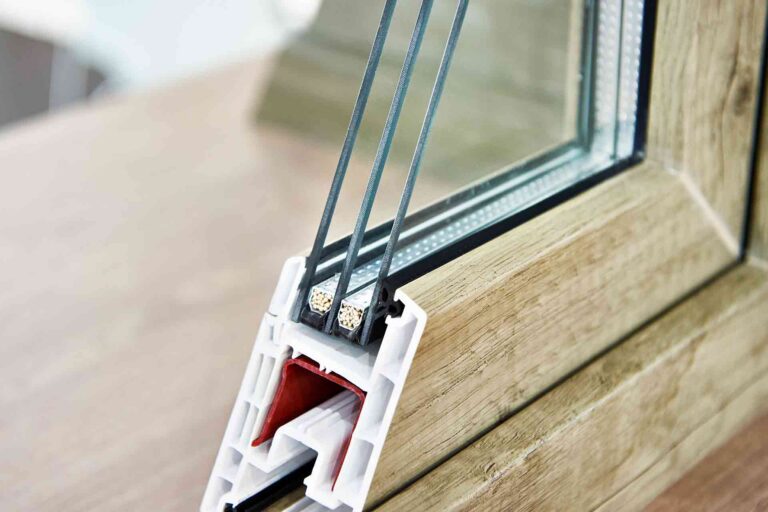
Furthermore, managing this leakage requires a departure from the “more is better” philosophy. Adding a third pane of glass, for example, can actually decrease acoustic performance if the air gaps between the panes create a “mass-air-mass” resonance that amplifies specific frequencies, such as the hum of a distant jet engine or the rumble of a subway. Success is found in the asymmetrical layering of materials and the absolute continuity of the perimeter seal.
Historical and Systemic Evolution of Glazing Performance
The trajectory of acoustic glazing has moved from mass-heavy solutions to chemistry-driven damping. In the early 20th century, sound isolation in glass was limited by the thickness of the plate. The heavier the glass, the more energy it took to move it, thus blocking more sound. This “Mass Law” was effective but reached its limit as building weights became a structural concern.
The introduction of Insulated Glass Units (IGUs) in the mid-century intended to solve thermal problems, but accidentally introduced acoustic “flanking paths” through the hollow spacers and the internal air cavity. It wasn’t until the development of specialized acoustic interlayers—specifically acoustic-grade PVB—that we could achieve high levels of isolation with relatively thin profiles. These interlayers work through “shear damping,” converting sound energy into microscopic amounts of heat.
Today, the systemic evolution has moved toward the “Total Envelope” approach. We no longer look at the glass in isolation but as part of a dynamic assembly including thermally-broken frames, pressure-equalized gaskets, and integrated facade damping. The current state-of-the-art involves vacuum-insulated glazing (VIG), which, by removing the air entirely, eliminates the primary medium for sound transmission between panes, though it introduces new challenges for edge-leakage management.
Conceptual Frameworks for Transparent Isolation
1. The “Airtightness” Framework
This model treats sound as a fluid. If a window is not airtight enough to hold a pressure differential, it will leak sound. This model prioritizes the perimeter over the field, suggesting that a 1/16th-inch gap at a corner gasket is more damaging to performance than using a thinner pane of glass.
2. The “Impedance Mismatch” Model
Sound travels most efficiently through materials of similar density. By alternating layers of glass, air (or gas), and polymer interlayers of varying thicknesses, we create “impedance mismatches.” Each time a sound wave hits a new material, a portion of its energy is reflected back rather than transmitted through.
3. The “Decoupling” Mental Model
This framework focuses on the frame-to-glass connection. If the glass is rigidly held in a metal frame, the vibrations from the glass are simply passed into the building’s structure. Management requires “floating” the glass in elastomeric gaskets to break the mechanical bridge.
Key Categories of Leakage Pathways and Material Trade-offs
Identifying where sound “escapes” or “enters” requires a taxonomy of the glazing assembly’s components.
| Component | Common Leakage Pathway | Trade-off / Consideration |
| Gaskets | Compression set (hardening) over time | EPDM is durable but may lose flexibility in extreme cold. |
| Weep Holes | Direct airborne path for water drainage | Necessary for moisture but acts as an “acoustic straw.” |
| Mullions | Hollow aluminum chambers acting as echo chambers | Lightweight for structure but requires internal damping. |
| Spacers | Rigid metal spacers bridging the two panes | Stainless steel or “warm-edge” plastic improves acoustics. |
| Frame Joints | Poorly mitered or unsealed corner joins | High labor cost for precision sealing vs. performance loss. |
Detailed Real-World Scenarios and Decision Logic How to Manage Acoustic Glass Leakage
Scenario 1: The High-Rise Near a Flight Path
A residential tower is situated within the 65 DNL (Day-Night Average Sound Level) contour of a major airport.
-
The Constraint: The glass must block high-frequency engine whine while maintaining high thermal efficiency.
-
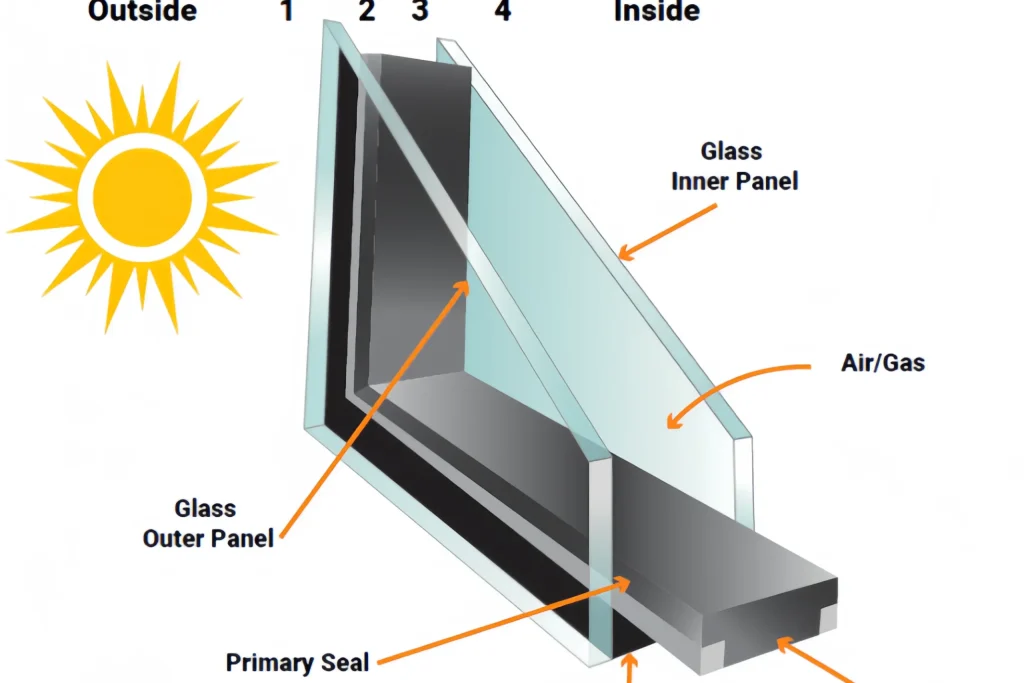
The Decision: Utilize an IGU with asymmetrical glass thicknesses (e.g., 6mm exterior and 10mm interior) and a wide 16mm air gap filled with Argon.
-
Second-Order Effect: The heavier glass increases the load on the window hardware, requiring upgraded hinges to prevent the “sagging” that would create a new perimeter air leak.
Scenario 2: The Retrofit of a Historic Office
An old brick building with single-pane windows is being converted into private law offices.
-
The Constraint: The exterior facade cannot be altered due to historic preservation laws.
-
The Decision: Install an “interior secondary glazing” system. This creates a large air cavity (100mm+) between the original glass and the new acoustic pane.
-
Failure Mode: If the secondary frame is not perfectly sealed to the masonry, the large cavity acts as a resonator, potentially making the room louder at certain frequencies.
Planning, Cost, and Resource Dynamics
The management of acoustic glass is a high-cap cost endeavor where the ROI is often measured in “rentable quiet” and human productivity.
| Strategy | Direct Cost (Material) | Indirect Cost (Labor/Structure) | Performance Gain |
| Laminated Glass | Moderate | Minimal | High (Speech frequencies) |
| Asymmetrical IGU | Low | Minimal | Moderate (Broadband) |
| Heavy Frames | High | High (Structural reinforcement) | High (Low-frequency) |
| Acoustic Gasketing | Low | High (Precision installation) | Critical (Perimeter) |
Direct vs. Indirect Costs
A common error is budgeting only for the “acoustic glass” and ignoring the structural reinforcement needed for the increased weight. Laminated glass is significantly heavier than standard annealed glass; if the floor slab or the curtain wall anchors are not rated for the additional dead load, the building may experience “creep,” which opens new leakage paths at the ceiling and floor junctions over time.
Tools, Strategies, and Support Systems
-
Acoustic Cameras: These devices use a microphone array to “see” sound, providing a heat map of where noise is bypassing a window assembly in real-time.
-
In-Line Baffled Weep Holes: Specialized drainage components that allow water to escape while forcing sound waves through a labyrinthine path to dissipate energy.
-
Non-Hardening Acoustic Sealants: Used at the frame-to-wall interface to ensure that as the building moves, the airtight seal remains intact.
-
Pressure-Equalized Rainscreen Systems: These manage air pressure within the frame, which can indirectly assist in reducing the “pumping” of sound through the gaskets during high wind events.
-
Spectrally Selective Coatings: While primarily thermal, these coatings can be layered with acoustic PVB to provide a “single-pane” solution for multi-performance needs.
Risk Landscape and Taxonomy of Failure Modes
Acoustic glazing management is often undone by “The Rule of the Smallest Gap.”
-
The “Miter Crack”: In aluminum frames, if the corner miters are not injected with sealant, they act as high-frequency whistles.
-
The “Compression Set”: Over 10–15 years, EPDM gaskets lose their “memory.” They no longer press firmly against the glass, creating a bypass path.
-
The “Structural Short-Circuit”: When a window is shimmed too tightly into a rough opening without a soft perimeter buffer, the building’s vibrations bypass the glass and travel directly through the frame into the room.
-
The “Hardware Gap”: In operable windows, the locking points must pull the sash tight against the gaskets. If there are too few locking points, the sash “bows” under wind pressure, breaking the acoustic seal.
Governance, Maintenance, and Long-Term Adaptation
The performance of an acoustic glazing system begins to degrade the moment the building is occupied. Environmental stressors—UV radiation, ozone, and thermal cycling—attack the elastomeric components that prevent leakage.
The Acoustic Lifecycle Checklist
-
Annual Ultrasonic Testing: Using a handheld ultrasonic transmitter and receiver to check for air-leaks around gaskets without needing a full acoustic lab setup.
-
Five-Year Gasket Audit: Inspecting for signs of brittleness or “flat-spotting” in the bulb gaskets of operable windows.
-
Sealant Inspection: Checking the perimeter caulk between the window frame and the masonry for signs of cohesive or adhesive failure.
Maintenance must be proactive rather than reactive. By the time a tenant complains that the “street noise has gotten louder,” the leakage path is likely already extensive enough to require significant component replacement.
Measurement, Tracking, and Evaluation of Success
Success in managing leakage is measured through field testing that goes beyond the manufacturer’s spec sheet.
-
OITC (Outdoor-Indoor Transmission Class): This is the more relevant metric for glazing, as it weighs low-frequency transportation noise more heavily than the standard STC.
-
Field Sound Transmission Class (FSTC): Conducted onsite to verify that the installation has not degraded the lab-tested performance of the glass.
-
Background Noise Monitoring: Using long-term data loggers to ensure that “noise spikes” (sirens, horns) are being attenuated to the target decibel levels defined in the project’s basis of design.
Common Misconceptions and Industry Oversimplifications
-
Myth: “Triple glazing is always quieter than double glazing.”
-
Correction: A double-pane unit with one thick laminated pane often outperforms a standard triple-pane unit due to the “triple-pane resonance” effect.
-
-
Myth: “Vacuum seals are for sound.”
-
Correction: While vacuums don’t transmit sound, the physical pillars required to keep the glass from imploding under pressure can act as “acoustic bridges.”
-
-
Myth: “If it’s waterproof, it’s soundproof.”
-
Correction: Water is a much larger molecule than a high-frequency sound wave. A seal can be watertight but still leak high-frequency “hiss.”
-
-
Myth: “Acoustic glass is thicker.”
-
Correction: It is often the laminate (the interlayer), not the thickness, that provides the damping. Two 4mm panes with a 0.76mm acoustic PVB often beat a single 12mm solid pane.
-
Ethical and Contextual Considerations in Noise Mitigation
There is a growing discussion regarding “acoustic equity.” As high-performance glazing becomes a luxury standard, the ability to “opt-out” of the urban noise environment is increasingly tied to socioeconomic status. From an editorial perspective, the management of acoustic glass is not just a technical requirement; it is a contributor to public health.
Chronic noise exposure is linked to cardiovascular disease and cognitive impairment. Therefore, the precision with which we manage glazing leakage is directly correlated to the health of the occupants. Architects and engineers have a practical duty to ensure that the “protection” promised by a window’s specifications is actually delivered in the final, built environment.
Conclusion: Synthesis and Adaptability
Mastering the complexities of how to manage acoustic glass leakage requires a shift from viewing windows as static objects to viewing them as high-precision mechanical filters. The field of transparent isolation is one of millimeters; a fraction of an inch in gasket compression or a few grams of sealant at a frame miter can be the difference between a serene interior and a failed project.
As building codes continue to tighten and urban centers grow louder, the demand for “forensic glazing” will only increase. In the end, the transparency of the glass should be the only thing that lets the outside world in.