How to Plan Glazing Renovation on a Budget: The Editorial Pillar
The glass envelope is the most technically volatile component of any building’s lifecycle. While masonry or structural steel can remain static for decades with minimal intervention, the glazing system—composed of complex chemical coatings, inert gas fills, and mechanical seals—is essentially a high-precision machine. How to Plan Glazing Renovation on a Budget. When this machine begins to fail, manifested through rising energy bills, persistent condensation, or aesthetic hazing, the immediate reaction of many property owners is a sense of financial dread. A full-scale glazing replacement on a mid-rise or high-rise asset is often one of the most capital-intensive projects in the facility’s history.
Navigating this transition requires a departure from the “rip-and-replace” mentality that dominated the early 2000s. The contemporary approach to managing the transparent skin is characterized by forensic analysis and surgical intervention. We are no longer limited to the binary choice of doing nothing or doing everything. Advancements in secondary glazing, localized seal remediation, and high-performance film technologies have created a middle path that allows for significant performance gains without the structural and logistical costs of a total envelope overhaul.
However, the path to a cost-effective glass upgrade is fraught with technical traps. A “budget” solution that fails to address the underlying thermal bridging of the aluminum frame or the structural integrity of the existing gaskets is not a saving; it is a delayed liability. To succeed, one must move beyond surface-level aesthetics and address the thermodynamics of the opening. This article serves as a definitive framework for stakeholders tasked with balancing the urgent need for thermal resilience against the rigid constraints of a capital expenditure budget.
Understanding “how to plan glazing renovation on a budget”
In the professional lexicon, the challenge of how to plan glazing renovation on a budget is an exercise in “Selective Remediation.” It is a multi-perspective discipline that requires the alignment of architectural intent with mechanical reality. A common misunderstanding among facility managers is that the glass itself is the primary cost driver. While high-performance Low-E coatings have a price premium, the vast majority of a renovation budget is typically consumed by “access costs”—scaffolding, craneage, and street closures—and the labor required to modify existing framing.
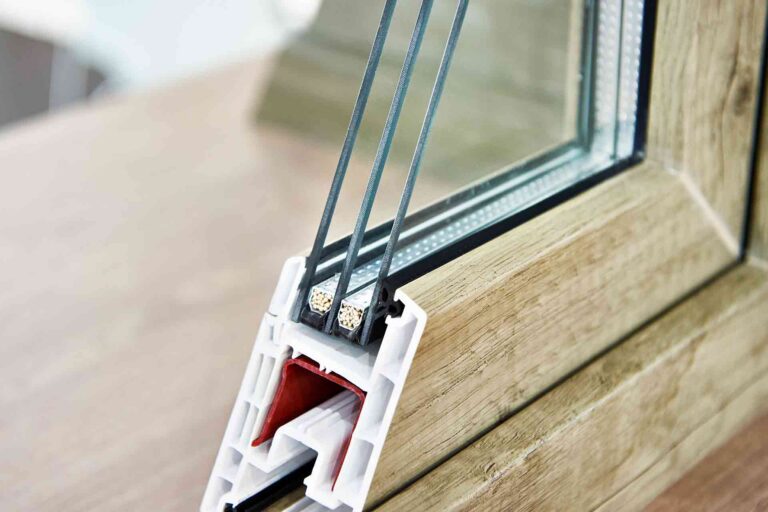
Oversimplification in this sector often leads to the “Glass-Only Fallacy.” Stakeholders may believe that swapping out double-pane units for newer, more efficient ones will solve their energy problems. However, if the existing aluminum frames lack a modern thermal break, the frame acts as a heat highway, bypassing the new glass entirely. A sophisticated budget plan recognizes that the frame and the glass are an inseparable thermal unit. Effective planning involves identifying if the frame can be “saved” through the insertion of thermal isolators or if it represents a terminal thermal bridge.
Furthermore, a strategic budget plan utilizes the “Orientation-Specific Strategy.” Not every window in a building performs the same duty. A south-facing facade in the Northern Hemisphere may require advanced solar-control coatings to reduce cooling loads, while the north-facing facade may prioritize $U$-value to prevent heat loss. By decoupling the specification across different building elevations, a project lead can allocate high-performance capital exactly where the physics demands it, rather than applying a costly, one-size-fits-all solution across the entire floorplate.
Deep Contextual Background: The Evolution of the Failure Curve
The historical context of glazing renovation is rooted in the “Sealed Unit Revolution” of the 1970s and 80s. Before this period, single-pane glass was the standard, and renovation meant simply adding a storm window. The widespread adoption of Insulated Glass Units (IGUs) promised a new era of efficiency, but it also introduced a finite lifespan to the window itself. IGUs rely on a primary and secondary seal to keep moisture out and insulating gases like Argon in. These seals are subject to “pump cycles”—the expansion and contraction caused by daily temperature swings.
By the early 2010s, a massive “failure wave” began to hit buildings constructed during the late-century boom. The seals had reached their 20-to-25-year limits, leading to internal fogging and the total loss of thermal value. Initially, the only solution offered by the industry was total replacement. However, the economic reality of the last decade has forced a pivot toward “Component-Level Repair.” We have seen the rise of technologies that allow for the “re-gassing” of units or the installation of ultra-thin secondary glass that creates a new insulating cavity without removing the original system.
Today, the context is further complicated by the “Carbon Mandate.” In many cities, buildings are now taxed on their operational carbon footprint. This has changed the ROI calculation for a budget renovation. A project that was once deemed “too expensive” may now be the most fiscally responsible choice when compared to the escalating fines for energy inefficiency. The modern budget renovation is no longer just about fixing a leak; it is about future-proofing an asset against regulatory shifts.
Conceptual Frameworks and Mental Models
To navigate the technicalities of a glass upgrade, practitioners use several mental models to predict performance.
1. The Total-Opening $U$-Value Model
This model forces the planner to look at the “Weighted Average” of the window. It calculates the performance of the glass, the spacer, and the frame as a single number.
-
Application: It prevents the mistake of spending money on $R$-10 glass for an $R$-1 frame.
-
Limit: It doesn’t account for air leakage, which is often a larger source of heat loss than conduction.
2. The Solar Heat Gain vs. Daylight Paradox
A framework for weighing the “free heat” of the sun in winter against the “cooling tax” in summer.
-
Application: It determines whether a building should use “passive” or “active” solar control.
-
Limit: High-tint glass can lead to increased electrical lighting costs, potentially negating the cooling savings.
3. The “Service Life Remaining” (SLR) Audit
This mental model treats every component of the window as having a separate clock.
-
Application: If the aluminum frames have 40 years of life left but the glass has failed, the plan should focus exclusively on a “pocket-replacement” or “insert” strategy.
Key Categories of Glazing Variations
Managing a budget requires understanding which technological category provides the highest “Delta” (change in performance) per dollar spent.
| Category | Primary Mechanism | Cost Level | Performance Impact |
| Film Retrofit | Polyester or ceramic layers applied to existing glass. | Low | High Solar Reduction; Low Thermal Gain. |
| Secondary Glazing | Adding a separate glass pane on the interior/exterior. | Moderate | Significant Acoustic and Thermal Boost. |
| IGU Replacement | Swapping out old double-panes for new Low-E units. | Moderate-High | Restores original thermal integrity. |
| Frame Over-cladding | Placing new thermal caps over existing frames. | Moderate | Reduces frame-based thermal bridging. |
| Vacuum Glazing | Ultra-thin units with an internal vacuum. | High | Exceptional insulation in standard frames. |
| Full Replacement | Removing frames and glass entirely. | Very High | Total reset of building envelope. |
Decision Logic for High-Efficiency Planning
If the existing frames are structurally sound and have an acceptable aesthetic, the most budget-conscious path is typically a combination of Secondary Glazing (for thermal/acoustic) or Advanced Film (for solar). Full replacement should only be considered if the frame’s structural anchors have failed or if the building is undergoing a complete change in use that requires a different window geometry.
Detailed Real-World Scenarios How to Plan Glazing Renovation on a Budget

Scenario A: The 1980s Office “Greenhouse”
A suburban office park with clear double-pane glass that makes the interior nearly uninhabitable in the summer.
-
Constraint: Low reserve fund; tenants cannot be moved.
-
Decision Path: Instead of replacement, a high-ratio spectrally selective ceramic film is applied to the interior. This blocks 60% of solar heat while maintaining transparency.
-
Failure Mode: If the film is applied to the wrong side of a heat-strengthened pane, it could lead to thermal stress breakage. Professional modeling is required.
Scenario B: The Historic Brick School
A century-old building with single-pane wood windows that leak massive amounts of heat.
-
Constraint: Preservation laws prevent any change to the exterior appearance.
-
Decision Path: Installation of high-performance interior secondary glazing. This creates an airtight seal and a thermal air gap while leaving the original windows untouched.
-
Second-Order Effect: The reduction in street noise was so significant it improved the learning environment, proving that “budget” fixes can have qualitative benefits.
Planning, Cost, and Resource Dynamics
The financial architecture of a glazing project is front-loaded with logistical costs that are often “invisible” in the initial quote.
| Cost Component | Relative Weight | Variability Factors |
| Material (Glass/Film) | 30% | Coating type, gas fill, glass thickness. |
| Access & Staging | 20% – 40% | Building height, sidewalk permits, union labor. |
| Labor (On-site) | 25% | Skill level, removal of old sealants, weather delays. |
| Disposal/Recycling | 5% | Laminated glass is harder/more expensive to recycle. |
| Contingency | 10% | Discovery of frame rot or unforeseen structural issues. |
Range-Based Budget Table
-
Surface Film Treatment: $10 – $25 per sq ft.
-
Secondary Glazing Systems: $40 – $80 per sq ft.
-
IGU Pocket Replacement: $60 – $120 per sq ft.
-
Full System Replacement: $150 – $350+ per sq ft.
Tools, Strategies, and Support Systems
To execute a surgical renovation, one needs more than just a screwdriver and a caulk gun.
-
Thermal Imaging Drones: Identifying exactly where heat is escaping before the project begins to target specific units.
-
Solar Path Analysis: Determining which windows actually need the most expensive coatings based on sun exposure.
-
Blower Door Testing: Measuring the air leakage of the window-to-wall interface, often the most overlooked part of how to plan glazing renovation on a budget.
-
Desiccant Moisture Measurement: Testing existing units to see if the internal moisture levels are terminal or if they can be remediated.
-
Spectrophotometers: Handheld tools used to verify the performance of existing glass on-site.
-
Low-Expansion Foam Injectors: For sealing the “rough opening” around old window frames without causing structural distortion.
Risk Landscape and Failure Modes
Every budget-saving measure introduces a potential risk of compounding failure.
-
Thermal Stress Breakage: Adding a dark film or a secondary pane can trap heat between the glass, causing the original pane to expand and shatter.
-
Condensation Trapping: If a secondary window is installed without a proper desiccant or ventilation, moisture will be trapped in the gap, leading to mold and permanent fogging.
-
Sealant Incompatibility: Using a modern silicone sealant that reacts with the 30-year-old rubber gaskets on the existing frame.
-
Structural Under-specification: Adding the weight of a secondary pane to a frame that was never designed for the extra load.
Governance, Maintenance, and Long-Term Adaptation
A glazing renovation is not a one-time event; it is the beginning of a new maintenance cycle.
The Post-Renovation Checklist
-
Yearly Sealant Check: Inspecting the perimeter caulking where the window meets the building skin.
-
Drainage Weep Audit: Ensuring that the drainage holes in the bottom of the window frame are not clogged with debris.
-
Gasket Elasticity Test: Checking if the rubber seals around the glass are becoming brittle or “chalky.”
-
Film Edge Inspection: For filmed units, checking for “fingering” or bubbling at the edges of the application.
Adaptation Triggers
If energy prices spike or carbon taxes increase, a “modular” budget plan allows the owner to add a second layer of intervention (like adding film to a secondary window) without undoing the previous work.
Measurement, Tracking, and Evaluation
How do we prove the budget was well-spent?
-
Leading Indicators: $U$-value verification from factory tags; successful water-leak tests on the first five installed units.
-
Lagging Indicators: Comparison of utility bills over a three-year period (normalized for weather); reduction in tenant maintenance requests for “drafts.”
-
Documentation:
-
Thermal Baseline: An infrared map of the building before and after the project.
-
The Gas Log: Verification of Argon levels for all new IGUs.
-
Common Misconceptions and Industry Oversimplifications
-
Myth: “Caulking the gaps is just as good as a renovation.”
-
Fact: Caulk is a temporary air-stop. It does nothing for the thermal conductivity of the glass or the frame.
-
-
Myth: “New windows will pay for themselves in energy savings in five years.”
-
Fact: In commercial settings, the payback is usually 15–20 years. The real value is in occupant comfort, asset value, and avoiding carbon fines.
-
-
Myth: “Argon gas lasts forever.”
-
Fact: Most IGUs lose gas at a rate of 1% per year. A 20-year-old window is likely just a “dead air” window.
-
-
Myth: “Secondary glazing looks like a storm window.”
-
Fact: Modern interior systems are nearly invisible and are used in museums and high-end hotels.
-
Ethical and Practical Considerations
Renovating glass is an act of environmental stewardship. The embodied carbon in a new aluminum window frame is massive. By choosing to rehabilitate the glass and the seals while keeping the original frames, a project lead is significantly reducing the carbon footprint of the renovation. However, this must be balanced with life-safety; if the old glass is not tempered and is in a “high-traffic” zone, a budget renovation must prioritize an upgrade to safety glass or an 8-mil security film to meet modern codes.
Conclusion
The successful planning of a glazing renovation on a budget is a victory of forensic engineering over marketing hype. It requires the discipline to ignore the “shiny and new” in favor of the “functional and durable.” By identifying the specific failure points of the existing system—whether they be radiant, conductive, or convective—an owner can apply surgical fixes that offer 80% of the performance of a new system at 30% of the cost. The future of our vertical cities depends on this kind of intelligent, iterative maintenance.