Structural Glazing Plans: Engineering & Detail Guide for 2026
The glass facade has transitioned from a decorative envelope to a primary structural participant in modern architecture. This shift represents more than a change in aesthetic preference; it is a fundamental reconfiguration of how buildings manage loads, thermal transfer, and environmental stressors. At the heart of this transition lies a complex set of technical documents and engineering calculations that define how glass, silicone, and metal substrates interact under pressure. Structural Glazing Plans. These systems do not merely “hang” on a building; they are integrated into its very DNA, requiring a level of precision that leaves no room for the tolerances common in traditional masonry or timber construction.
Designing these transparent boundaries involves a delicate balancing act between transparency and rigidity. To achieve a seamless “all-glass” look, engineers must account for wind suction, seismic drift, and the specific chemical compatibility of structural sealants. The failure of a single bond or a miscalculation in thermal expansion can lead to systemic instability. Consequently, the development of these systems is less about choosing a product and more about a rigorous process of material science and geometric coordination.
This editorial exploration examines the mechanics of structural glazing from the ground up. We will look beyond the visual allure of the curtain wall to investigate the underlying logic that ensures these massive panes remain secure over decades of exposure. From the chemical bond of high-modulus silicones to the mechanical precision of point-supported fittings, this guide serves as a definitive reference for understanding the high-stakes engineering required to build with light.
Understanding Structural Glazing Plans
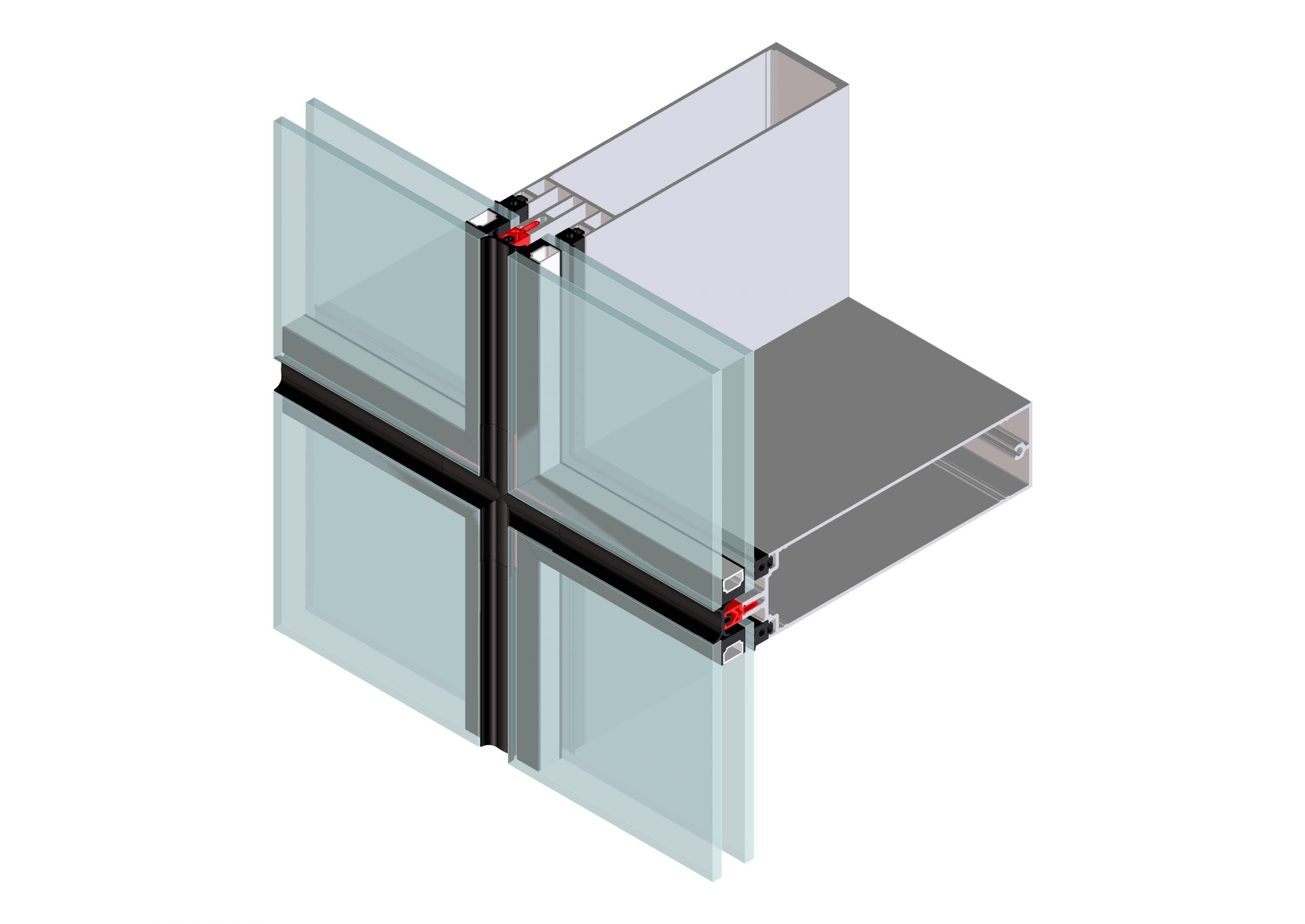
When we discuss structural glazing plans, we are referring to a specialized subset of architectural detailing where the glass is bonded to the building’s frame using a high-strength, high-performance sealant—typically silicone—instead of being held in place by traditional gaskets and pressure plates. This approach allows for a completely flush exterior surface, but it fundamentally changes the risk profile of the facade. The “plan” is not just a drawing; it is a comprehensive strategy that includes sealant bite calculations, dead-load support analysis, and rigorous substrate testing.
A common misunderstanding in the field is that structural glazing is purely an aesthetic choice. In reality, it is a performance-driven engineering solution. One of the primary risks of oversimplification is the assumption that any high-strength adhesive can suffice. Structural glazing requires specific silicones that can withstand UV radiation, extreme temperature fluctuations, and constant cyclic loading without losing elasticity or adhesion. If the planning phase neglects the chemical compatibility between the glass coating, the spacer, and the sealant, the entire system is compromised from day one.
Furthermore, these plans must account for the “transfer of forces.” In a traditional window, the frame takes the wind load directly. In structural glazing, the sealant is the bridge through which that force must pass. This requires a shift in perspective: the sealant is no longer a weather-proof barrier; it is a structural component as critical as a steel beam or a concrete column.
Deep Contextual Background: From Greenhouse to Skyscraper
The history of structural glazing is a story of material science catching up to architectural vision. While the 19th-century Crystal Palace demonstrated the potential for large-scale glass structures, it relied on heavy iron frames. The true progenitor of modern structural glazing was the development of two-part structural silicones in the mid-20th century. These adhesives provided the necessary bond strength and durability to eliminate the need for external mechanical retainers.
By the 1970s, four-sided structural glazing became a reality, allowing for the monolithic glass cubes and towers that define modern metropolitan skylines. This evolution was accelerated by the introduction of tempered and laminated safety glass, which provided the structural integrity required to span larger openings. Today, we have entered the era of “total vision” systems, where even the supporting mullions are made of glass (glass fins), creating a nearly 100% transparent building envelope.
Conceptual Frameworks and Mental Models
To effectively navigate the complexity of these installations, several mental models are useful:
-
The “Structural Glue” Model: View the sealant not as a caulk, but as a flexible weld. This mindset ensures that the “bite” (the width of the sealant bond) and the “thickness” (the depth of the sealant) are treated as non-negotiable engineering requirements.
-
The Thermal Expansion Differential: Different materials—glass, aluminum, and silicone—expand at different rates. A successful plan treats the facade as a living, moving entity rather than a static wall.
-
The Redundancy Framework: In high-stakes glazing, one must always ask: “What happens if the bond fails?” This leads to the inclusion of temporary mechanical retainers or secondary bonding surfaces to prevent catastrophic detachment.
Key Categories and Variations
Structural glazing can be categorized by the number of sides bonded and the method of support.
| System Type | Mechanism | Primary Advantage | Trade-off |
| Two-Sided SG | Two sides mechanical; two sides silicone | Balanced safety and aesthetics | Visible horizontal or vertical lines |
| Four-Sided SG | All four sides bonded with silicone | Maximum transparency; flush look | Highest reliance on sealant integrity |
| Point-Supported | Bolted through glass to “spiders” | Ultimate “frameless” appearance | High stress concentration at holes |
| Unitized SG | Pre-assembled factory modules | Rapid site installation; QC control | High logistics and transport costs |
| Stick-Built SG | Assembled on-site piece by piece | Flexible for complex geometries | High risk of site contamination |
Decision Logic
The choice between unitized and stick-built systems often comes down to the environment. In a high-wind coastal area, a unitized system is superior because the critical structural bonding happens in a climate-controlled factory, ensuring the sealant cures in optimal conditions without dust or moisture interference.
Detailed Real-World Scenarios Structural Glazing Plans
Scenario 1: The High-Rise Seismic Zone
In seismic regions, the structural glazing plans must allow for significant “racking” or lateral movement. If the glass panels are too rigid, the building’s sway will shatter them. The solution is often a unitized system with “split-mullion” technology, allowing individual units to move independently while maintaining the weather seal.
Scenario 2: The Overhead Atrium
Glazing placed over people’s heads introduces a “gravity load” risk. Here, the failure mode is not just wind suction but the constant pull of the glass weight against the sealant. These scenarios require mechanical “dead-load” supports (small metal shelves) to carry the weight, leaving the silicone to manage only the wind and thermal loads.
Planning, Cost, and Resource Dynamics
The economics of structural glazing are heavily weighted toward the front end—engineering and material testing.
| Budget Category | Range (Approx.) | Variability Factors |
| Engineering/Testing | 10%–15% | Complexity of wind loads, seismic requirements |
| High-Spec Glass | 45%–55% | Low-E coatings, laminates, oversized panes |
| Structural Sealants | 5%–8% | Specific chemical formulations (1-part vs 2-part) |
| Specialized Labor | 25%–35% | Height of installation, site access, QC monitoring |
The “opportunity cost” of skipping a chemical compatibility test can be the total replacement of the facade within five years if the sealant begins to delaminate from the glass coating.
Risk Landscape and Failure Modes
The risks in structural glazing are often “invisible” until they become catastrophic.
-
Chemical Incompatibility: Certain cleaning agents or secondary gaskets can leach plasticizers that degrade the structural silicone.
-
Improper Surface Prep: If the aluminum frames are not cleaned with the “two-wipe” method (solvent then dry), the bond may look secure but will fail under load.
-
Adhesive Failure vs. Cohesive Failure: In testing, we look for cohesive failure (the silicone itself tears). Adhesive failure (the silicone peels off the substrate) indicates a fatal planning or application error.
Governance, Maintenance, and Long-Term Adaptation
A structural glazing system is not a “set and forget” asset. It requires a rigorous monitoring cycle:
-
Year 1-5: Annual visual inspection for sealant “crazing” or edge delamination.
-
Year 10+: Deglazing samples—removing small sections of sealant to test for retained elasticity and bond strength.
-
Adjustment Triggers: Any significant seismic event or hurricane-force wind requires a mandatory “all-points” inspection of the sealant bite.
Measurement and Tracking
Success is tracked through both quantitative and qualitative data.
-
Quantitative: Peel tests (measured in lbs/inch), Shore A hardness of the cured sealant, and thermal imaging to detect air leakage.
-
Qualitative: Documentation of the batch numbers of all silicones used and the weather conditions during on-site application.
-
Example Documentation: A “Log of Sealant Application” should record ambient temperature, humidity, and the specific cleaner used for every single panel.
Common Misconceptions
-
“Glass is a solid”: It is more accurate to view it as a rigid liquid that moves and deflects.
-
“Silicones are just glue”: They are elastomeric polymers with complex molecular structures designed for specific stress-strain curves.
-
“Any clear glass is fine”: Modern facades require specific “Low-E” coatings that must be “edge-deleted” (stripped away) where the silicone bonds to the glass, or the bond will only be as strong as the coating’s grip on the glass.
Synthesis
The integrity of a building’s transparent skin depends entirely on the rigor of the structural glazing plans. As architecture pushes toward larger spans and thinner profiles, the margin for error shrinks. Success in this field is not found in the most transparent glass or the strongest metal, but in the invisible interface where they meet. A disciplined approach to material compatibility, environmental load paths, and long-term maintenance ensures that these icons of modern design remain as safe as they are beautiful.